Planning a UAE trip? Use public transport for getting around inside Dubai and Abu Dhabi, but consider a rental car for inter-emirate trips. Budget for Salik toll gates and paid parking, exchange cash at city exchange houses (not airport counters), and reserve winter stays early. Summer heat changes plans—keep indoor options ready and watch for sandstorm alerts if you’re driving or flying.
Do this next
- Compare city public transport vs. car rental based on your day-by-day itinerary.
- Swap currency at reputable city exchanges; avoid airport counters for larger amounts.
- Check seasonal timings and reserve hotels/attractions ahead in peak months.
Getting around the Emirates without overspending
City vs inter-emirate reality
Within Dubai or Abu Dhabi, metro and bus networks can cover many visitor routes. Between emirates (for example, Dubai to Abu Dhabi or Dubai to Fujairah), public options can be less frequent and may add a lot of time compared with driving.
City public transport: what it’s good for
For day-to-day movement inside the city—malls, main tourist areas, and business districts—public transport plus short taxi rides can keep costs predictable. If you’re mainly staying on one side of the city, you’ll also spend less time in traffic and looking for parking.
When renting a car makes sense
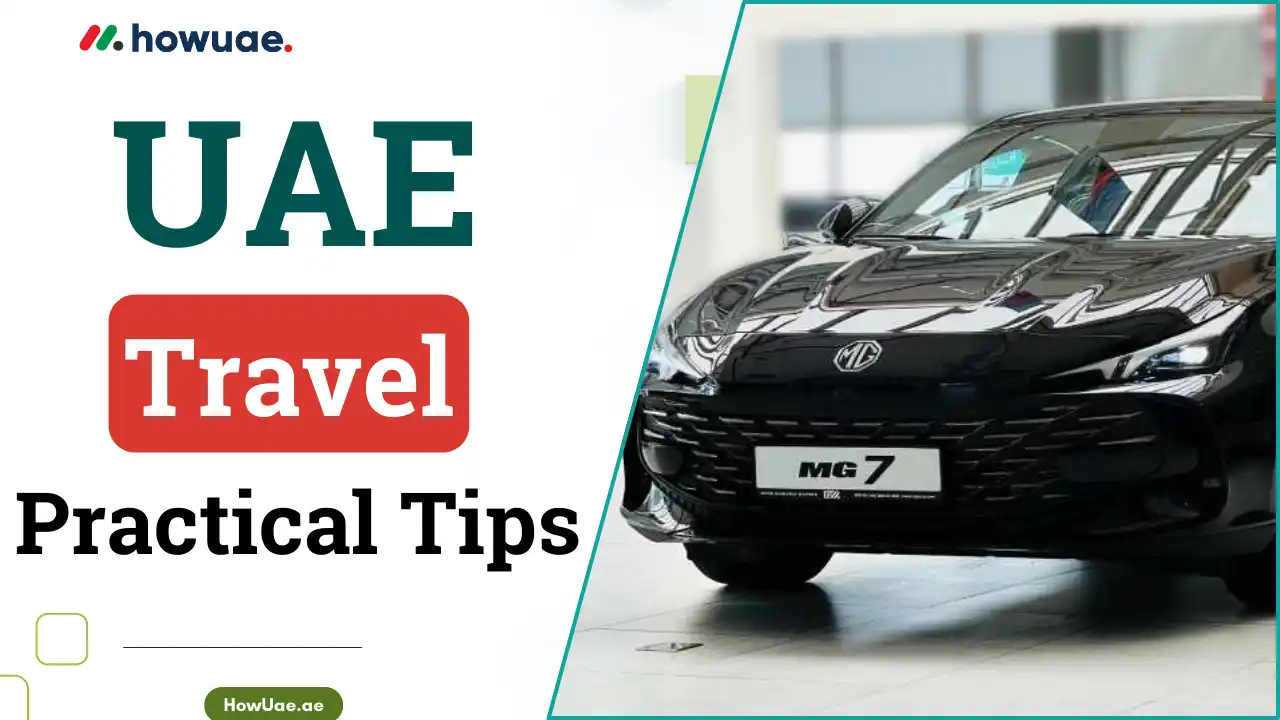
Distances between emirates are long, and flexible side trips (mountains, beaches) are simpler by car—so many travelers rent MG 7 in Dubai for comfort and luggage space. When you compare prices, add tolls, fuel, parking, and insurance to your total—not just the daily rate.
Taxis and peak-hour traps
Metered taxis are regulated and easy to use, but costs climb fast on longer rides and inter-city runs. Expect slower trips and higher total spend during peak hours or large events.
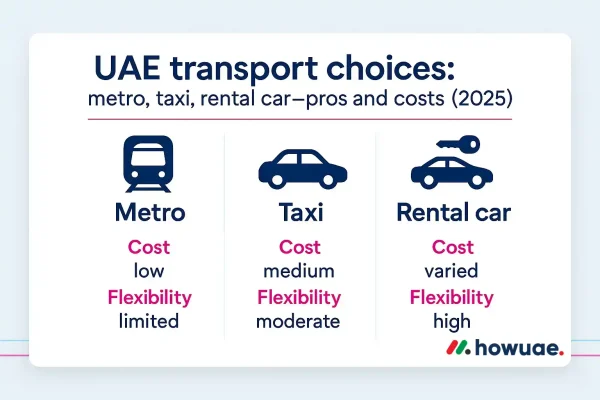
Card — Quick transport math
- Public transport (metro/bus inside city): lowest cost, longer door-to-door time.
- Taxi (short hops): convenient, moderate cost.
- Rental car (multi-stop / multi-emirate): best flexibility; remember tolls + parking.
Money smarts: payments, exchanges, and fees
Where to exchange
Airport counters are convenient but usually give a worse rate. City exchanges—especially in traditional market districts like the Gold Souk area—often have better spreads. If you need cash right after landing, take out only a small amount and do the main exchange later in the city.
Cards and contactless
Most venues accept cards, and Apple Pay and Samsung Pay are commonly supported. Small cafés, taxis, and souks may still prefer cash, so keep some UAE dirhams (AED) for low-value purchases.
Hidden fees to avoid
International ATM withdrawals can include a percentage fee plus a flat charge, depending on your bank. Also watch for DCC (currency conversion offered at the card terminal): if you’re asked whether to pay in your home currency or AED, choosing AED can help you avoid an extra margin built into the conversion. Policies can change, so confirm with your bank and card provider before you travel.
Table — Common money moves & what to do
| Situation | Better choice | Why |
|---|---|---|
| Need AED on arrival | Withdraw minimal cash at airport; do larger swaps in city | Airport spreads are worse |
| Paying in stores | Use local-currency card payment; avoid DCC | Terminal conversion can add hidden margin |
| Cash for souks/small cafés | Exchange at reputable city counters | Often better spreads than airport counters |
Weather & season planning
Summer reality check
From late spring to early autumn, outdoor plans can become uncomfortable. Build an indoor list (malls, museums, aquariums) and schedule outdoor activities for early morning or late evening. Carry water, and plan breaks in air-conditioned areas.
Sandstorm days
Visibility can drop, driving becomes risky, and flights may be delayed. If forecasts look severe, postpone long highway trips and keep your day flexible.
Winter sweet spot
November–March usually brings the most comfortable weather—and higher prices. Book hotels and popular restaurants weeks in advance. For 2026 trips, double-check current opening hours and seasonal schedules close to your travel dates, especially around public holidays.
Card — Seasonal snapshot
- Summer (hot/humid): indoor activities, hydration, sun care.
- Shoulder months: mixed; keep flexible plans.
- Winter (prime): book early; popular brunches require reservations.
Parking, tolls, and other driving costs
Salik and beyond
Dubai’s Salik gates charge per pass. You may also face paid parking in busy districts such as Dubai Marina and JBR, especially during peak hours. If you’re renting, ask how toll charges are recorded and billed, and check the latest rules with the official operator or your rental agreement before you drive.
Valet vs self-parking
Valet parking is convenient but can become expensive over several days, especially around premium districts. Self-parking can cost less, but you may need extra time to find a spot and walk.
Table — Driving cost checklist
| Cost item | What to check |
|---|---|
| Tolls (e.g., Salik) | Number of gates on your typical routes |
| Parking | Rates in hotel area + nearby public lots |
| Fuel | Estimate based on inter-emirate distance |
| Insurance | Collision Damage Waiver (CDW) / Theft Protection (TP) inclusions and excess |
Dining and cultural timing
Brunch culture and bookings
Friday/Saturday brunches are popular; walk-ins can be turned away. Reserve in advance during high season, and expect higher demand around major events and long weekends.
Tipping and service charges
Some bills include a service charge; tipping is optional. If service is great, many visitors leave a small extra tip, but it’s your choice.
Business and religious timings
Ramadan can shift restaurant and office hours. Attractions typically stay open with adjusted times. If you have meetings, allow some flexibility around prayer times when needed.
Accommodation strategy that actually saves
Loyalty programs help
Free upgrades, late checkout, and breakfast can add real value if you already use a hotel group. Compare the member rate against standard booking sites before you commit.
Location trade-offs
Beach access often raises rates and can make it harder to explore other areas each day. Central locations can reduce daily transport time and make it easier to mix metro, taxis, and walking.
Booking windows
Weekend peaks (Thu–Sat) are often priced higher. For better value, consider Sun–Tue stays outside major holidays, and book earlier for winter dates.
When to rent a car
If you’re hopping between emirates or exploring mountains and beaches beyond common tour routes, renting can be the most practical option. Executive sedans can suit business travel and long highway drives. If you want space and comfort, pick models with roomy cabins and safety features you’re used to.
Step-by-step — How to decide on transport in 10 minutes
- Map your stops by day (city-only vs multi-emirate).
- Price two scenarios: public+taxi vs rental (add tolls, parking, fuel, insurance).
- Check season (winter demand, Ramadan hours).
- Book the winning option; keep a backup plan for sandstorms or heat advisories.
Pro Tip: Put your hotel, client sites, and key attractions into a single map layer. Then toggle “avoid tolls” to see alternative routes and whether a toll-free plan meaningfully changes drive times.
FAQs
Is public transport enough for a week in Dubai?
For many trips, yes—metro, buses, and taxis cover a lot of tourist areas. Add a rental car mainly if you’re planning day trips to Abu Dhabi, Fujairah, or mountain areas where public options can be limited or take much longer.
Are tolls and parking really that significant?
They can add up fast. If your route crosses multiple toll gates several times a day and you’re parking in paid districts, the add-ons may change your rental vs. taxi comparison. Build tolls and parking into your estimate before you book.
What changes during Ramadan for visitors?
Restaurant hours and some services can shift, and daytime dining may be more limited in some places. Attractions usually remain open with adjusted timings. Evenings can get busy with iftars, so reserve ahead for popular venues.
Where should I exchange money in the UAE?
If you can, exchange most of your cash in the city rather than at the airport. Traditional market areas (such as around the Gold Souk) often have exchange houses with better spreads. If you need AED immediately, exchange or withdraw only a small amount at the airport first.
How do I avoid extra card conversion charges when paying?
When a card terminal offers to convert the transaction into your home currency (DCC), choosing to pay in AED can help you avoid the terminal’s conversion margin. Also watch your bank’s foreign transaction fees and ATM charges, since these vary by provider.
How should I plan days when it’s very hot or dusty?
In summer, shift outdoor activities to early morning or late evening and keep an indoor list (malls, museums, aquariums). On sandstorm days, consider postponing long highway drives and leave extra time for potential flight delays.