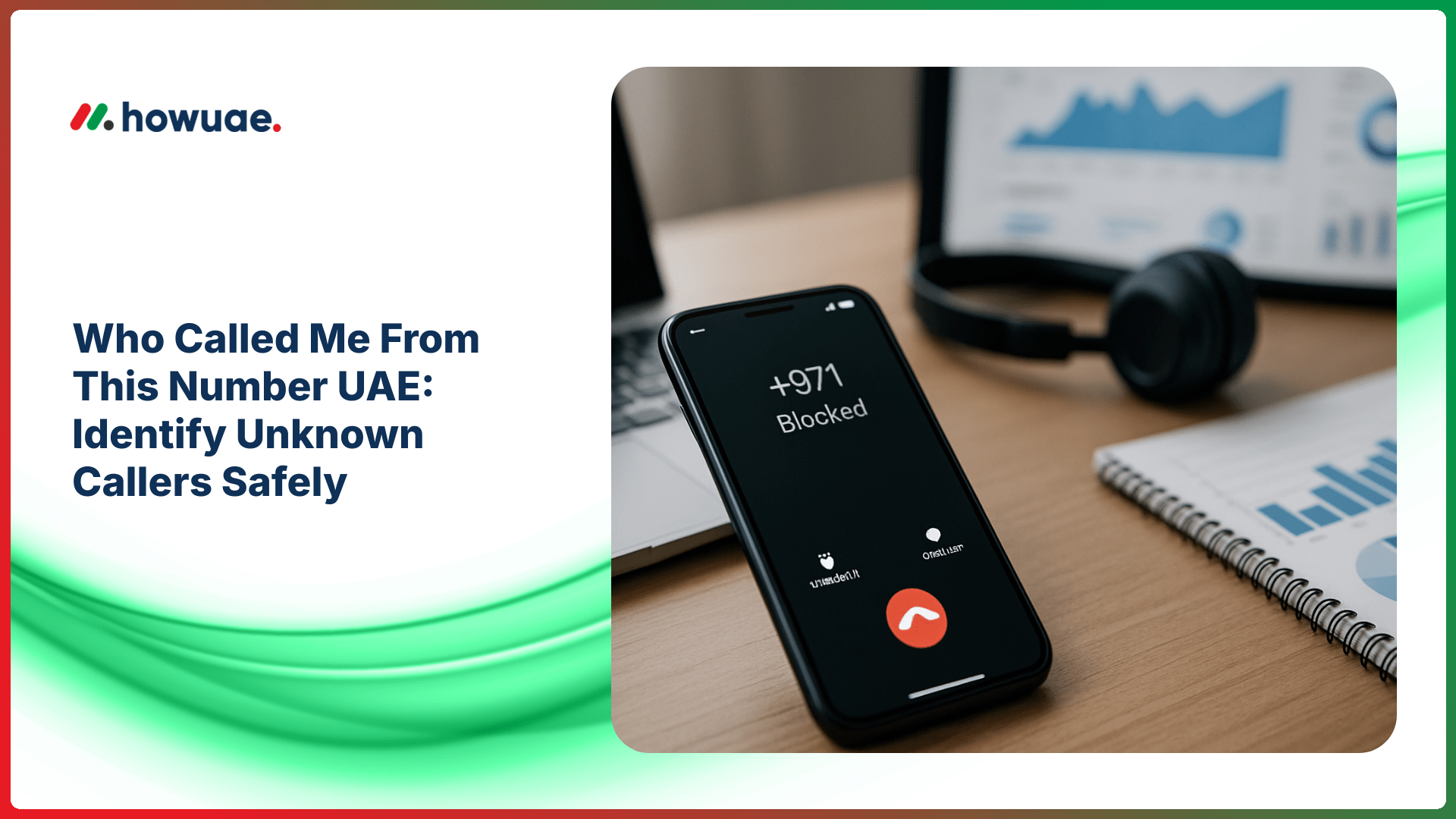
Unknown calls are common in the UAE—some are genuine (delivery drivers, banks, clinics), while others are scams. If you’re searching who called me from this number UAE, this guide will help you identify the caller using safe, practical methods—without risking your money, Emirates ID details, or OTPs.
Before You Do Anything: A 30-Second Safety Check
When an unfamiliar number calls, the safest approach is to pause and verify. Many fraud attempts rely on urgency and confusion.
Golden rule: Never share OTPs, card PINs, online banking passwords, or Emirates ID/visa file details with an unknown caller—even if they claim to be “bank,” “police,” or “telecom.”
- Don’t call back immediately if the number looks suspicious or international.
- Don’t tap links sent by SMS/WhatsApp claiming “fine,” “package,” “blocked account,” or “update KYC.”
- Check the number format (UAE numbers often start with +971; landlines commonly begin with 02/03/04/06/07/09).
- Search first, respond later—especially if the caller asks for money or personal data.
How to Identify Unknown Callers in the UAE (Safe Methods)
1) Check if the number is saved anywhere on your phone
Sometimes the “unknown” number is from a service you used before (courier, building security, HR, school). Quick checks:
- Look at your recent WhatsApp chats and archived chats.
- Search your contacts for partial digits (some phones allow searching by number).
- Check your email/SMS history for delivery updates that mention a driver number.
2) Use WhatsApp to validate the identity (without messaging)
Add the number to your contacts and open it in WhatsApp (you don’t need to send a message). Check:
- Name display (often a business name or real first name).
- Profile photo (be cautious: scammers can use fake logos).
- About/status (some legitimate businesses list working hours or company info).
Safety tip: If the WhatsApp profile shows a bank logo but the number is a random mobile line, treat it as suspicious and verify via official channels.
3) Search the number in Google (and read results carefully)
Copy the full number (include +971 if present) and search it. You may find:
- Listings on business directories (clinics, shops, service centers).
- Reports on forums or complaint sites (spam/scam patterns).
- Social media pages where the number is posted publicly.
What to watch: One negative comment isn’t proof, but multiple reports describing the same script (OTP request, “account blocked,” “police case”) is a strong warning sign.
4) Use caller ID / spam protection apps (with privacy awareness)
Apps like Truecaller and built-in spam detection on Android/iOS can help label telemarketers and known scam numbers. However:
- Caller ID databases can be inaccurate (names may be outdated or user-submitted).
- Privacy matters: some apps request contact access—review permissions carefully.
- Never treat an app label as “official verification” for banks/government entities.
5) Check whether the caller claims a “fine” or “case” (verify independently)
Scammers in the UAE often impersonate authorities and use fear: “You have a case,” “You have fines,” “Your Emirates ID is blocked,” “You will be arrested.” If you receive such a call or message, verify using official portals and trusted guidance—not the number that contacted you.
For example, if the message pushes you to pay or “confirm Emirates ID,” cross-check through trusted steps (and be wary of spoofed links). You can also review related guidance like Emirates ID fine check so you understand what legitimate fine checks look like and what details they do (and don’t) ask for.
Common UAE Number Patterns (And What They Might Mean)
Number patterns aren’t perfect proof, but they help you assess risk quickly.
- +971: UAE country code. Most legitimate UAE calls show +971 or the local format (05x for mobiles).
- Landlines: 02 (Abu Dhabi), 03 (Al Ain), 04 (Dubai), 06 (Sharjah/Ajman/UAQ), 07 (Ras Al Khaimah), 09 (Fujairah) are common patterns.
- International numbers: If you have no reason to receive international calls, be cautious—especially if the caller claims to be a UAE bank or government office.
- Hidden/Private number: Legitimate organizations sometimes call privately, but scams also use hidden numbers. If it’s important, they can email you or ask you to call the official hotline.
Red Flags: Signs the Caller Is Likely a Scam
Use this checklist. One red flag can happen innocently; several together usually indicate fraud.
- They ask for an OTP, banking password, card PIN, CVV, or to “confirm” a code you receive by SMS.
- They pressure you with urgency: “act now,” “account will be blocked,” “police case in 10 minutes.”
- They request remote access (AnyDesk/TeamViewer) to “help” you update details or unlock an account.
- They send a link to pay a “fine” or “delivery fee,” especially from a shortened URL.
- They claim to be an authority but refuse to let you call back via an official published number.
- They ask for Emirates ID front/back photo or your visa file number without a proper reason.
- They use generic greetings (“Dear customer”) but pretend to know your account.
- They mention tax/TRN issues and push payment/verification via phone—validate through official sources instead.
If the scam involves “TRN verification” or VAT/tax impersonation, learn how proper checks work through verify TRN number in UAE so you don’t rely on a caller’s instructions.
What to Do If You Think the Call Is Legit (But You’re Not Sure)
Ask verification questions (then hang up and call back)
If someone claims to represent a bank, telecom, government department, courier, or employer, use this approach:
- Ask for their full name, department, and reference number.
- Tell them you will call back via the official website number.
- Hang up and call the organization using a number you find on the official site/app (not the number that called you).
A safe script you can use
Here’s a simple, firm response:
“Thanks. I don’t share personal details on incoming calls. Please give me your reference number and I’ll call the official hotline from the website/app to continue.”
How to Block and Report Spam Calls in the UAE
If you confirm it’s spam or suspicious, block the number. Also consider reporting patterns so others are protected.
Block the number (Android / iPhone)
- iPhone: Recent Calls → tap (i) → “Block this Caller”.
- Android: Recent Calls → tap number → “Block/Report spam” (wording varies by device).
Report through official UAE channels
For telecom-related spam, consumer reporting guidance is available via the Telecommunications and Digital Government Regulatory Authority (TDRA). For broader safety best practices, see UAE government cyber safety and digital security guidance.
If the scam includes threats about “cases” or “police records,” you can also review how people typically verify or follow up using guides like Dubai Police case check—but remember: real authorities won’t ask you to transfer money or share OTPs on an unsolicited call.
If You Already Shared Information or Sent Money
Act quickly. Speed matters in limiting damage.
- Contact your bank immediately via the official hotline to freeze cards, stop transfers, and reset online banking access.
- Change passwords for email, banking, and any linked accounts (use strong, unique passwords).
- Remove remote access apps if you installed any, and run a security scan.
- Document everything: numbers used, call times, screenshots, links, transaction references.
FAQs: Who Called Me From This Number UAE
Can scammers fake (spoof) UAE numbers?
Yes. Caller ID can be spoofed, so seeing a “local” UAE number doesn’t guarantee legitimacy. Always verify by calling back through official numbers and never share OTPs.
Is it safe to call back an unknown number in the UAE?
It can be safe if you first verify the number via search and it matches an official business listing. If it’s suspicious (no online presence, many spam reports, aggressive behavior), don’t call back—use alternative channels like the company’s official hotline or app.
What if the number is from a courier or delivery driver?
This is common. Delivery drivers typically confirm location, building, and landmark. Be cautious if they ask for card details, OTPs, or payment links that don’t match the merchant’s usual process.
Why do I get many “bank” calls even when I don’t have an account there?
That’s a classic sign of broad telemarketing lists or scam campaigns. Legitimate banks generally won’t request sensitive verification details on an unsolicited call.
How do I know if an SMS about fines or Emirates ID is real?
Don’t trust the SMS alone. Avoid links sent in the message and verify through official portals and known apps. If the message revolves around ID-related issues, review safe expectations using the Emirates ID fine check guidance and compare it with what the message is asking for.
What details should I never share on incoming calls?
Never share OTPs, PINs, CVV, online banking passwords, or full card details. Be extremely cautious sharing Emirates ID images, visa file numbers, and salary/bank account details unless you initiated the call and confirmed the official channel.
Quick Summary: Identify Unknown Callers Safely
To handle “who called me from this number UAE” safely, use a verification-first mindset: check WhatsApp profile, search online, use caller ID tools carefully, and validate claims through official channels. If the caller pressures you, requests OTPs, or sends payment links, treat it as a scam, block the number, and report through appropriate UAE channels.