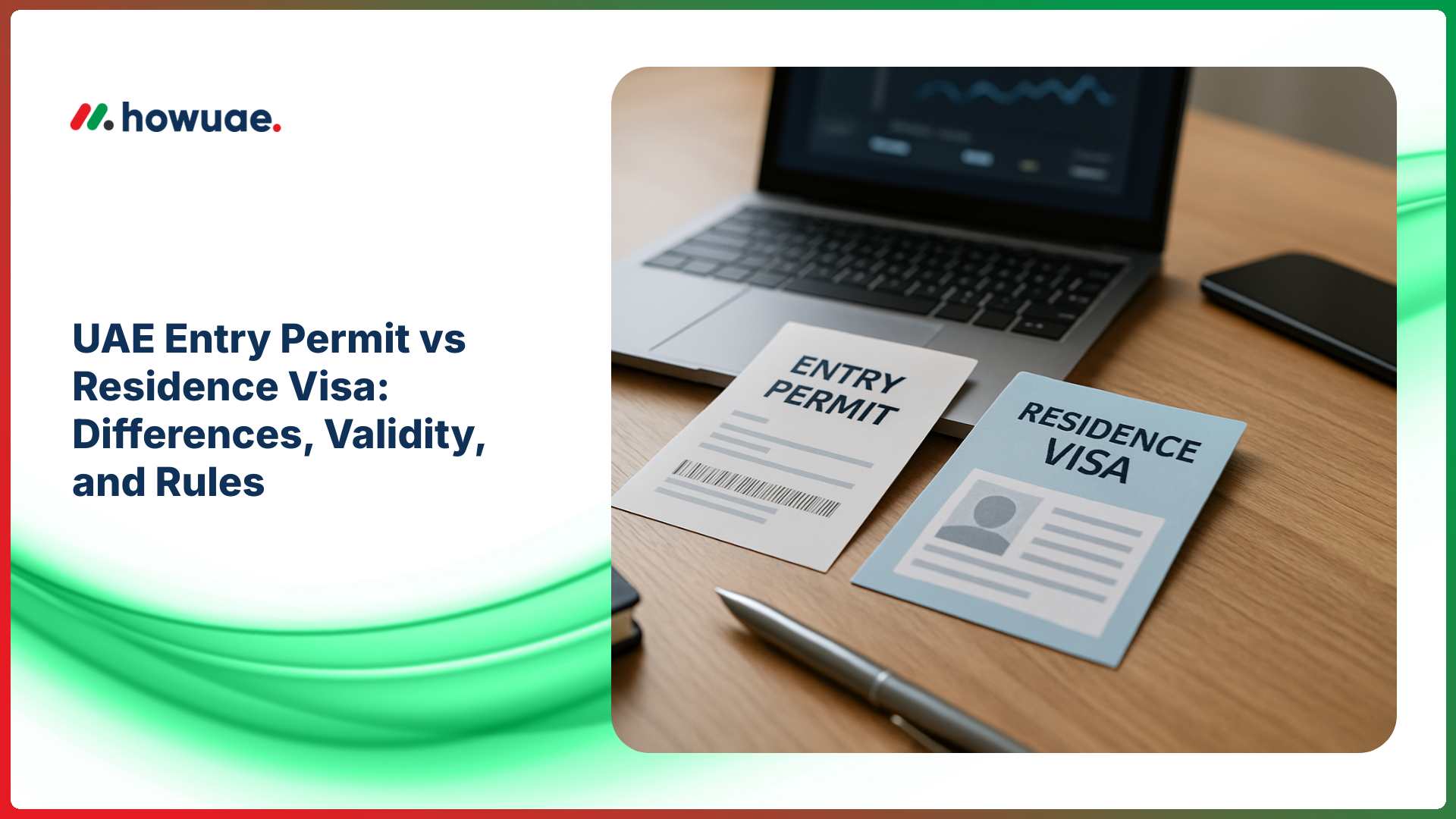
If you’re moving to the UAE for work, family, study, or investment, you’ll often see two terms that sound similar but mean very different things: an entry permit and a residence visa. This guide explains the entry permit vs residence visa UAE in plain language, with a comparison table, validity rules, and real-world examples so you know exactly what you can (and can’t) do at each stage.
Quick definitions (what each one actually is)
What is a UAE entry permit?
An entry permit (sometimes called “e-visa” or “permit to enter”) is the document that allows you to enter the UAE (or remain in-country during a change of status) for a specific purpose such as employment, family joining, study, or certain types of residency setup. It is usually time-limited and is meant to be used to complete residency formalities.
What is a UAE residence visa?
A UAE residence visa is the long-term residency authorization that lets you legally live in the UAE for a longer period (commonly 1–3 years, and longer for certain categories). It is tied to a sponsor (employer, family member, or self-sponsorship route depending on visa type) and is supported by steps like medical fitness and Emirates ID registration.
Entry permit vs residence visa UAE: key differences (comparison table)
| Feature | Entry Permit | Residence Visa |
|---|---|---|
| Purpose | Allows entry or status change to begin residency process | Allows long-term stay and legal residency in the UAE |
| Typical validity | Short validity (often 30–90 days depending on category/issuer) | Longer validity (commonly 1–3 years; varies by visa type) |
| When you get it | Before residency stamping/issuance | After medical, Emirates ID biometrics, and approval |
| Can you live in the UAE long-term? | Not as a final status; it’s a temporary step | Yes, for the visa validity period |
| Can you sponsor family? | Generally no | In many cases yes (subject to salary/role and rules) |
| Does it replace Emirates ID? | No | No, but residency supports obtaining/maintaining Emirates ID |
| Where it’s processed | Federal (ICP) or local authority (e.g., GDRFA in Dubai) | Federal (ICP) or local authority (e.g., GDRFA in Dubai) |
| What happens if it expires | You may need extension, exit, or new permit; overstays can apply | You must renew/cancel properly; overstays and fines can apply |
How the process usually works (from entry permit to residence)
In most residency routes, the entry permit is the “gate pass” that starts the residency timeline. After you enter the UAE (or do an in-country status change), you normally complete the remaining steps within the permit validity:
- Medical fitness test (for most adult applicants)
- Emirates ID biometrics and application
- Residency approval/issuance through the relevant authority
Rules and steps differ by emirate and visa type. For official portals and service access, you can refer to ICP Smart Services (federal) and, for Dubai-issued visas, GDRFA Dubai.
Validity and timeline rules you should know
Entry permit validity (and why it matters)
Entry permits are time-sensitive. The exact duration depends on the permit category and issuing authority, but the practical rule is the same: you must complete the residency steps before the entry permit expires. If you delay, you can run into extension requirements or overstay issues.
Residence visa validity (and renewal)
Residence visa validity depends on your visa category (employment, family, investor, etc.) and the issuing emirate. Renewals typically require updated documents and may require medical fitness again (depending on category). Always check your own expiry dates and renewal windows via official channels.
To confirm current status and expiry, follow a step-by-step visa validity check in UAE using the correct portal for your visa.
What you can and can’t do on each status
On an entry permit
- Can: enter the UAE (or change status in-country, if applicable) and proceed with residency formalities.
- Usually can’t: treat it like a long-term visa, delay indefinitely, or use it as proof of final residency for services that require residency status.
On a residence visa
- Can: legally live in the UAE for the validity period, access many resident services (subject to eligibility), and in many cases sponsor dependents.
- Must: renew on time or cancel properly if you’re leaving/changing sponsorship.
Practical way to remember it: the entry permit is the bridge; the residence visa is the destination.
Common scenarios (examples)
Example 1: New job in Dubai (outside the UAE)
Your employer arranges an employment entry permit. You enter the UAE on that permit, complete medical and Emirates ID biometrics, and then your residence visa is issued. Until residency is issued, you’re still in the “entry permit stage,” so delays can create timing pressure.
Example 2: Family joining (spouse/children)
A resident sponsor applies for dependents’ entry permits so they can enter the UAE (or change status if already inside). After entry, dependents complete required steps and then receive residence visas under the sponsor.
Example 3: Switching sponsors or changing status inside the UAE
When you change jobs or move from one sponsorship type to another, your old residence visa may need to be cancelled and you may receive a new entry permit/status change approval before the new residence is issued. If you’re in this situation, make sure you understand visa cancellation and final settlement timelines so you don’t accidentally fall out of status.
Overstay, fines, and compliance tips
Overstay rules can apply if you remain in the UAE after your permitted stay expires (whether that’s an entry permit window, a visit visa, or after residence expiry without renewal/cancellation). If you think you may have exceeded the allowed period, verify immediately and take action.
Use this guide to check your overstay fine in UAE and follow official instructions for settlement. Acting early can prevent larger penalties and additional restrictions.
- Tip: Keep screenshots/PDFs of approvals and receipts from official portals.
- Tip: Don’t assume “grace periods” are the same for every case; rules can vary by visa type and authority.
How to identify your visa details (permit, residency, and numbers)
If you’re unsure whether you’re looking at an entry permit or residence-related details, start by identifying the document type and your visa number. Many services and checks require the correct number format. This guide on the UAE visa number can help you find the right reference in your paperwork.
FAQs: Entry permit vs residence visa UAE
Is an entry permit the same as a residence visa in the UAE?
No. An entry permit is a temporary authorization to enter the UAE (or change status) so you can complete residency steps. A residence visa is the longer-term status that allows you to live in the UAE for the visa validity period.
How long can I stay in the UAE on an entry permit?
It depends on the permit type and issuing authority, but it is typically short (often around 30–90 days). Check the validity dates written on your permit and complete the residency steps within that time.
Can I work in the UAE on an entry permit?
In many employment cases, the entry permit is part of the onboarding process, but your ability to work legally depends on the correct approvals and the employment/residency process being properly completed under your sponsor. If in doubt, confirm with your employer/PRO and the relevant authority.
What happens if my entry permit expires before my residence visa is issued?
You may need an extension, a new permit, or a different legal step depending on your case. If you remain after expiry, overstay fines may apply. Check your status promptly and follow official guidance to regularize.
How do I check whether my residence visa is still valid?
Use official channels to confirm your current visa status and expiry. Follow these ICA Smart Services visa validity check steps to verify the information on the correct portal.
Conclusion
Understanding the entry permit vs residence visa UAE distinction helps you avoid missed deadlines, overstays, and unnecessary delays. Treat the entry permit as a short window to complete residency formalities, and treat the residence visa as the status you must maintain through timely renewal or proper cancellation.