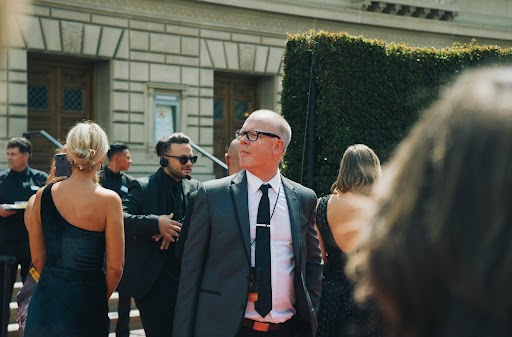
Popular culture has given executive protection a distorted reputation — sunglasses, earpieces, and a suited figure scanning a crowd. The reality is far less cinematic and considerably more administrative. Most of the work happens days before the principal arrives anywhere, and the best outcome is one where nothing observable occurs at all.
Dubai attracts an unusual concentration of people who need this service: regional executives, family office principals, visiting dignitaries, entertainers, and high-net-worth residents. Understanding what the discipline actually involves helps buyers make sensible decisions rather than aesthetic ones.
The Work Starts With Assessment
Before any protection detail is assigned, a competent provider conducts a threat and risk assessment. This examines the principal’s public profile, business sector, travel patterns, media exposure, family situation, and any history of unwanted contact.
The assessment produces a risk rating that determines everything downstream — team size, vehicle configuration, whether residential security is warranted, and how much advance work each movement requires. Skipping this stage and jumping straight to assigning officers is the clearest sign of an unserious provider.
Advance Work: The Invisible Majority
For any planned movement, an advance officer visits the destination beforehand. They identify entry and exit points, establish where the vehicle can pull in closest to the door, locate the nearest medical facility, note where crowds gather, and identify a secondary route out.
This is unglamorous work — walking hotel corridors, timing lift journeys, talking to venue managers. It is also the reason well-run details rarely encounter surprises. When something does go wrong, the response is fast because the alternatives were mapped in advance.
Team Structures
Detail size scales with assessed risk rather than with the principal’s importance.
| Configuration | Typical composition | Suited to |
|---|---|---|
| Single officer | One protection officer, often also driving | Low risk, routine business movements |
| Two-person detail | Protection officer plus security driver | Moderate risk, regular public exposure |
| Small team | Team leader, two officers, driver, advance | Elevated risk, public events, media presence |
| Full detail | Multiple officers, advance team, residential coverage, counter-surveillance | High risk, sustained threat, dignitary status |
Most corporate requirements in Dubai fall into the first two rows. Over-specifying draws attention, which is usually counterproductive.
The Security Driver Is Not a Chauffeur
Vehicle movement is where principals are most exposed, and the driver’s role is a protection function in its own right. A trained security driver understands route variation, maintains space around the vehicle in traffic, positions to allow rapid departure, and knows how to break away from a developing situation.
Anyone evaluating executive protection dubai providers should ask specifically about driver training. A regular chauffeur in a nice car is transport, not protection.
Discretion as an Operational Requirement
In Dubai’s business environment, visible heavy security often creates the exposure it’s meant to prevent. It signals that someone important — and by implication wealthy — is present.
Skilled protection officers dress to match the environment, maintain conversational distance, and pass as assistants or colleagues. The objective is that a room notices the principal and not the detail. Providers whose officers look like a film set are selling reassurance rather than security.
Residential and Family Considerations
Protection frequently extends beyond the principal. Family members, particularly children, may face different exposure — school runs, sports clubs, and social media presence all create predictable patterns.
Residential security assessment covers perimeter integrity, camera coverage, alarm response, domestic staff vetting, and safe room provision. Many principals discover their home is the weakest point in an otherwise well-managed picture.
Medical Capability
A significant share of real incidents on protection details are medical rather than criminal — cardiac events, falls, heat-related illness. Officers with genuine first aid and trauma training, carrying appropriate kit, provide value on ordinary days as well as extraordinary ones.
Ask what medical qualification the assigned officers hold and when it was last renewed.
Information Security
Modern protection includes managing digital exposure. Travel details posted on social media, published itineraries, and predictable routines create the intelligence that anyone with hostile intent would need.
Good providers advise on this — delaying social posts, varying routines, limiting who knows movement schedules. It costs nothing and closes the most commonly exploited gap.
Coordination Within the Law
Protection officers in Dubai operate under UAE law with defined limits. They are not empowered beyond ordinary citizens in most respects and must coordinate with police where enforcement is required. Any provider suggesting otherwise is misrepresenting the legal position, which is itself disqualifying.
Frequently Asked Questions
When does a business actually need executive protection?
Common triggers include a public profile increase, litigation or labour disputes, sector-specific risk, prior unwanted contact, or travel to higher-risk jurisdictions. Many companies engage protection situationally — for specific visits or events — rather than permanently.
Are protection officers armed in Dubai?
Private security personnel in the UAE generally operate unarmed. Effective protection here relies on planning, positioning, and avoidance rather than force, and coordination with police handles anything requiring enforcement.
How far in advance should protection be arranged?
For a planned visit, two weeks allows proper assessment and advance work. Shorter notice is workable but compresses the preparation that makes the difference.
Can protection be arranged for a single day?
Yes. Single-day and event-specific details are common — board meetings, product launches, court appearances, or airport transfers for visiting executives.
What qualifications should I look for?
Recognised close protection certification, SIRA licensing, current first aid or trauma qualification, security driving training, and verifiable experience in comparable environments. Ask for the specific officers’ backgrounds, not just the company’s credentials.
The Practical Takeaway
Executive protection is a planning discipline supported by trained people, not the reverse. The measure of a good detail is that the principal’s schedule runs on time, they arrive and depart without friction, and nobody in the room particularly noticed how that happened.
Buyers who evaluate on assessment quality, advance procedure, and officer background get that outcome. Buyers who evaluate on appearance generally don’t.